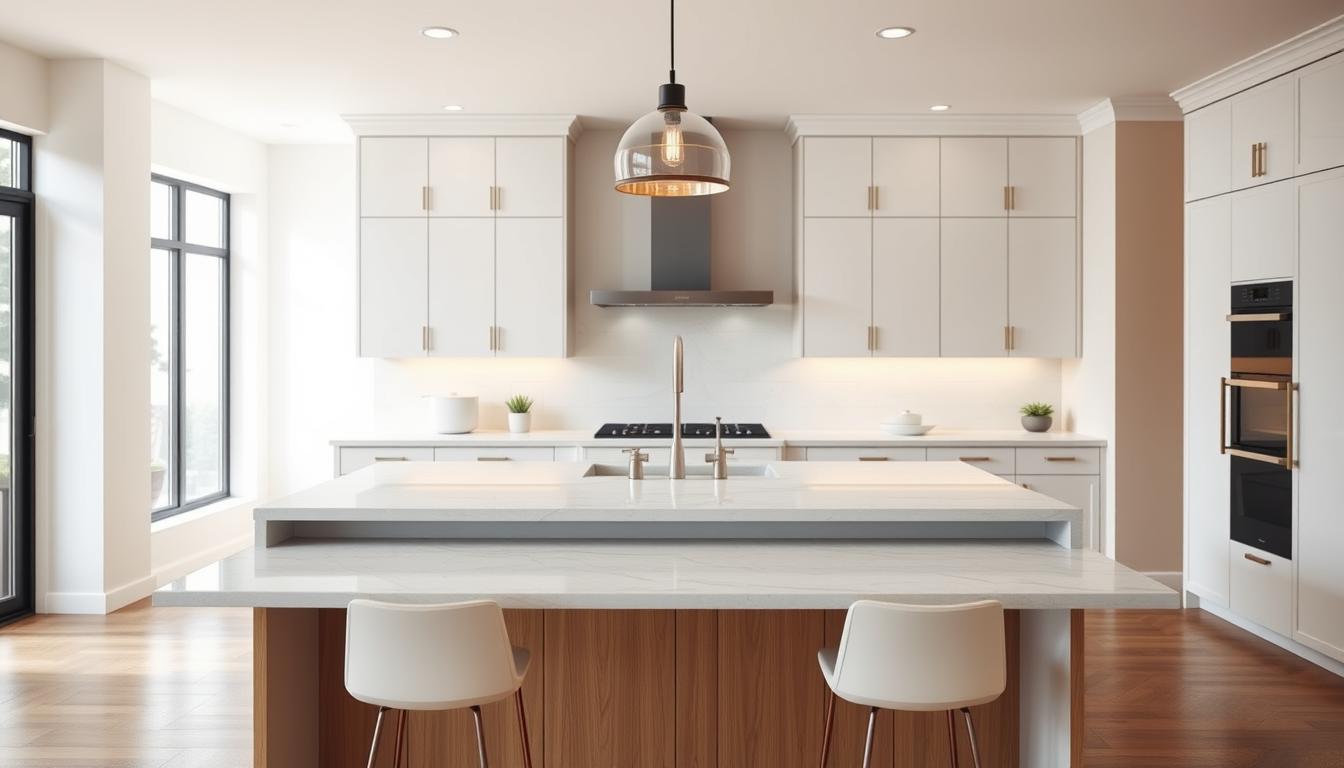
Did you know that nearly 70% of homeowners say their kitchen is the most used area? It’s the heart of your home, so getting the kitchen island design right is key. Your renovation should show off your style and fit your family’s needs.
Your kitchen is where you start your day and gather with friends. It needs to be both beautiful and practical. Think about how you move around your home to make your kitchen work better. You might find ideas in these layouts to help you plan. If you need help making your kitchen dream come true, our consulting services are here for you.
Key Takeaways
- Prioritize functionality by matching your layout to your specific daily cooking and hosting needs.
- Ensure adequate traffic flow by maintaining at least four feet of clearance around your central unit.
- Create visual harmony by coordinating materials or choosing an intentional contrast with your existing cabinetry.
- Focus on a single standout decorative element to maintain a clean, uncluttered surface.
- Select the right build type, whether custom, prefab, or mobile, to suit your long-term flexibility requirements.
Understanding the Functionality of a Kitchen Island
A well-planned kitchen island is the heart of a modern home. It connects your cooking and social life, becoming a central spot for family activities. A thoughtful kitchen island design boosts your daily routine’s efficiency.
Why Choose a Kitchen Island?
Homeowners add an island for its versatility. It offers extra space for tasks like chopping vegetables or rolling dough. Beyond utility, it’s a natural spot for conversation while cooking.
It also defines zones in open-concept homes. It separates cooking from living areas without walls. This creates a spacious, organized feel.
Types of Kitchen Islands
There are many options for your island. A custom kitchen island fits your exact needs. These fixtures often become the room’s centerpiece, blending with your cabinetry.
For small spaces, consider small kitchen island ideas with vertical storage. A movable kitchen island is great for flexibility. These units have wheels, making them easy to move when needed.
| Island Type | Best For | Flexibility | Storage Capacity |
|---|---|---|---|
| Custom Fixed | Large Kitchens | Low | High |
| Movable Cart | Small Kitchens | High | Low |
| Breakfast Bar | Socializing | Medium | Medium |
Assessing Your Space Requirements
Measure your kitchen before deciding on an island. Keep paths around the island at least four to four and a half feet wide. This ensures easy movement for everyone.
Think about how the island will work with your stove, sink, and fridge. A smooth work triangle makes cooking efficient. If your kitchen is narrow, choose a slim, mobile island to avoid clutter.
Selecting the Right Style for Your Kitchen
The right kitchen island design can change your kitchen’s feel. It’s important to pick a style that matches your home. Whether you like a simple look or a cozy, rustic feel, your island should fit right in.
Modern vs. Traditional Designs
Modern kitchen islands have clean lines and simple finishes. They’re great for busy homes because they keep things organized. Traditional styles, on the other hand, have fancy details and warm feelings.
“The kitchen is the heart of the home, and the island is its pulse. It should be both a functional workspace and a beautiful centerpiece.”
Adding Personal Touches
A contemporary kitchen island design lets you show off your style. You can add special hardware or unique features like wine racks. These small touches make your kitchen feel like home.
It’s key to keep these additions useful to avoid clutter. Here’s a table to help you choose the right style:
| Style Feature | Modern Approach | Traditional Approach |
|---|---|---|
| Cabinetry | Flat-panel, handleless | Raised panel, ornate |
| Countertop | Waterfall edge, quartz | Butcher block, marble |
| Lighting | Geometric pendants | Lantern-style fixtures |
How Color Impacts Design
Color is crucial for your island’s impact. Many choose a farmhouse kitchen island in soft colors to stand out against white cabinets. This makes your kitchen memorable and highlights the island.
Think about how your island’s color works with the floor and backsplash. A dark island can ground a light kitchen. By matching these colors, your island will feel like part of your home, not just an addition.
Material Choices for Your Kitchen Island
We think the materials for your island should match your style and needs. Choosing the right parts lets you make a custom kitchen island that’s the heart of your home. Whether you want something sleek or rustic, the right mix of textures will make your space better.
Popular Countertop Materials
The countertop is where your island gets the most use, so picking the right material is key. Many choose durable quartz because it’s stain and scratch resistant and looks clean. For a contemporary kitchen island design, marble or granite offers a timeless, high-end look that grounds the room.
For a farmhouse kitchen island, consider a butcher block top. Wood brings warmth and a natural feel that softens your kitchen. Mixing materials can create a unique, layered look that catches the eye.
Cabinets and Base Options
Your island is a chance to mix up your cabinetry with different woods or bold colors. Choosing a base that contrasts with your cabinets makes your modern kitchen islands stand out. We recommend using high-quality hardwoods like oak or maple for the base for durability.
Adding open shelving or decorative panels can also add interest. A custom kitchen island lets you add these special touches that standard cabinets can’t. These choices help you make the island fit your specific needs for storage and display.
Durability vs. Aesthetics
Finding the right balance between function and beauty is key. You want a contemporary kitchen island design that looks great but also holds up to daily use. Choose materials that are easy to clean and maintain over time.
For a farmhouse kitchen island, pair a rugged wood base with a durable stone countertop. This mix keeps your island functional and stylish for years. The best modern kitchen islands blend practicality with sophisticated style.
Incorporating Storage Solutions
Clutter-free kitchens often rely on smart use of space under countertops. A well-designed island is more than prep space. It’s a key spot for organizing your essentials. With the right kitchen island storage solutions, every tool finds its home.
Open Shelving vs. Closed Cabinets
Deciding between open shelving and closed cabinets depends on your style and kitchenware display preference. Open shelving offers a quick, easy access to items like cookbooks or bowls. But, it needs constant tidiness to avoid clutter.
Closed cabinets, on the other hand, provide a clean look by hiding unsightly items. Use them for bulk goods or heavy pots. This keeps your kitchen neat and intentional.
Maximizing Under-Island Storage
Under-island storage is crucial. Adjustable shelving fits items of different sizes, from blenders to spice jars. Using the island’s full depth ensures no wasted space.
Shallow cupboards on the island’s ends are great for daily items. This keeps your main area clear while keeping essentials within reach. Even a movable kitchen island benefits from these smart additions, keeping your space organized wherever it goes.
Innovative Drawer Ideas
Drawers are efficient for storage, bringing items into the light. Deep drawers are perfect for heavy cookware, eliminating the need for dark cabinets. Narrow, vertical pull-outs are great for baking sheets or cutting boards.
For movable kitchen islands, look for units with locking casters and drawer organizers. These features keep items in place when moving the island. Hidden compartments in the toe-kick area are ideal for flat items like trays or cooling racks.
| Storage Type | Best For | Visual Impact |
|---|---|---|
| Open Shelving | Cookbooks & Decor | Airy & Accessible |
| Closed Cabinets | Appliances & Bulk | Clean & Minimalist |
| Deep Drawers | Pots & Pans | Functional & Tidy |
| Vertical Pull-outs | Trays & Boards | Space-Saving |
Planning for Seating Arrangements
Adding a kitchen island with seating turns your cooking area into a lively spot for family and friends. The best designs mix your daily needs with the room’s size. If you don’t plan to sit there often, skip the stools to save space.
How Many Seats Do You Need?
Deciding on the number of seats depends on your family size and how you host guests. A good rule is to have at least 24 inches of space per person. This ensures everyone has room to move comfortably.
For small kitchens, small kitchen island ideas can be a lifesaver. Consider a curved overhang or corner seating to save space. This keeps your kitchen open while still offering a spot for quick meals.
Choosing the Best Seating Styles
Choosing the right stools is about matching your kitchen’s look and feeling comfortable. Look for stools with backrests for long sits. Swivel stools are also great because they’re easy to get on and off without moving the stool.
Bar Stools vs. Counter Stools
It’s important to know the difference in stool heights for comfort. Counter stools fit standard 36-inch high surfaces, while bar stools are for taller 42-inch surfaces. The wrong height can make sitting uncomfortable.
| Stool Type | Ideal Surface Height | Best Use Case | Comfort Level |
|---|---|---|---|
| Counter Stool | 36 Inches | Standard kitchen islands | High |
| Bar Stool | 42 Inches | Raised bar tops | Medium |
| Backless Stool | Variable | Small spaces | Low |
Enhancing Lighting Around the Island
Lighting your workspace is key to both style and function. A well-lit contemporary kitchen island design is essential. It makes your kitchen look good and work well.
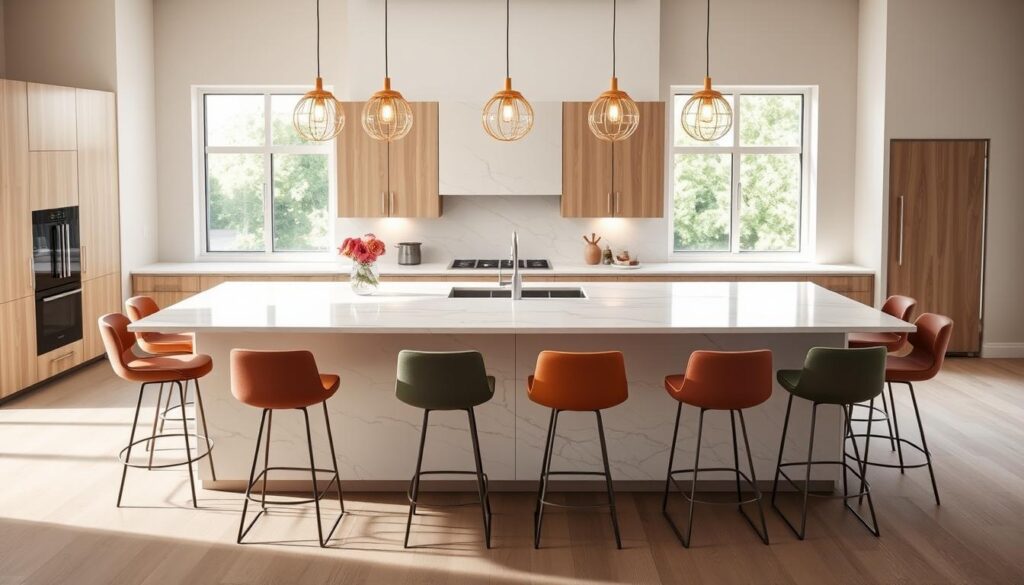
Ambient vs. Task Lighting
For a balanced look, mix ambient and task lighting. Ambient lighting lights up the whole room. Task lighting shines on your work areas.
This mix prevents harsh shadows while you cook or prep. It’s crucial for safety and accuracy in the kitchen.
Pendant Lights: A Stylish Choice
Pendant lights are a key feature in a contemporary kitchen island design. They add style and focused light.
- Choose glass shades for a light, airy feel.
- Select metallic finishes to add a touch of modern luxury.
- Install them at eye level to create a balanced visual anchor.
Dimming Options for Flexibility
Dimmers are a must for control over your space. They let you change the light from bright to soft.
This flexibility is key in modern homes. The kitchen is often used for many things. With dimmers, you can change the mood for any event.
| Lighting Type | Primary Purpose | Best Placement |
|---|---|---|
| Recessed Lighting | General Ambient Glow | Ceiling perimeter |
| Pendant Lights | Task & Decorative | Above island surface |
| Under-Cabinet | Focused Task Light | Below upper cabinets |
Choosing Appliances for Your Island
Turning your kitchen island into a utility powerhouse begins with picking the right appliances. Adding specialized tools to your workspace can make cooking easier and keep counters clear. Whether you’re redoing a big space or need small kitchen island ideas, the right gear is key.
Essential Appliances to Consider
Adding a secondary prep sink can change how you prep meals. It lets you wash veggies or rinse utensils without going to the main sink. Microwave drawers are also great, as they’re hidden but still easy to use every day.
Integrating With Existing Kitchen Features
Good integration means planning to match your island with your kitchen. Think about plumbing and electrical needs early to avoid extra costs. Kitchen island storage solutions help keep things tidy and look good with your cabinets.
Hidden Appliance Solutions
For a clean look, hide your appliances in custom panels. This keeps your kitchen sleek, even with built-in appliances. If you rent or are on a budget, a movable kitchen island offers utility without permanent changes.
The best kitchen designs focus on both looks and function. Each appliance should help in your daily cooking.
Your goal is a space that fits your life. Choose built-in or movable options to make your island the most efficient zone in your home.
Creating a Multi-Functional Space
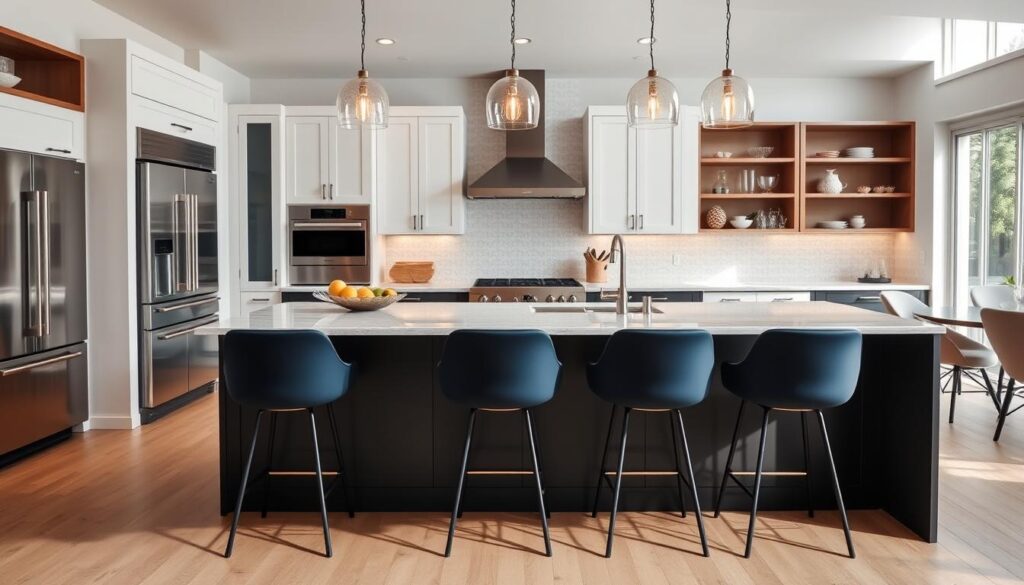
We think every kitchen island should be a dynamic space that changes with your day. By choosing smart layouts, you can turn modern kitchen islands into the ultimate spot for your family. Wondering how to design a multifunctional kitchen? The key is to set up different zones for different tasks.
Cooking and Meal Prep Zones
The main job of an island is to help with food prep. Make a “wet zone” near the sink and a “dry zone” for chopping. Whether you like a sleek look or a farmhouse kitchen island, having your tools close by is key for smooth work.
- Install a built-in cutting board for easy cleanup.
- Keep spice racks or utensil drawers integrated into the base.
- Ensure there is enough countertop clearance for multiple people to work at once.
Homework and Crafting Nooks
Your island can also be a productive workspace. Add power outlets and USB ports for laptops or tablets. This makes your kitchen a center for creativity and learning.
Think about adding shallow drawers for pens, paper, and craft supplies. This keeps the surface clean for dinner prep. A tidy nook keeps your kitchen useful for the whole family all day.
Social Spaces for Entertaining
The best designs focus on bringing people together. A kitchen island with seating makes guests feel welcome while you cook. This setup makes cooking a shared experience.
“The kitchen is the heart of the home, and the island is its pulse, beating with the rhythm of daily life and social connection.”
To make your island a social hub, pick stools that are comfy and stylish. Choose materials that are easy to clean, so your space stays neat after parties. By zoning your island well, you make a place where everyone wants to sit and stay.
Finalizing Your Kitchen Island Design
Turning your dream into reality needs a solid plan and teamwork. A successful project makes your home both beautiful and practical.
Collaborating With a Designer
Designers add their expertise to your kitchen island project. They make sure your needs fit into a space that works well. This way, your storage solutions match your lifestyle perfectly.
Budgeting for Your Remodel
Planning your budget wisely keeps your project on schedule. It’s smart to save extra for unexpected costs. With a good budget, you can choose top-quality materials for your island without giving up on important features.
Choosing a Contractor for Installation
The right team is key to a successful remodel. Look for licensed contractors with a good track record. A skilled installer will make sure your design is safe and meets high standards. Share your ideas with us in the comments below to let us know which features you plan to prioritize in your new space.