Did you know we spend almost 90% of our time indoors? Yet, we often overlook how artificial light affects our body’s internal clock. Our bodies need natural cycles to manage energy and sleep, but regular bulbs often mess with these rhythms. By switching to smart lighting for home systems, we can sync our indoor lights with the sun’s natural rhythm.
Your home should be more than a place to sleep; it should be a dynamic sanctuary that changes with your needs. Today’s tech lets us change light colors and brightness with just voice commands or set schedules. This control helps create a personalized space that boosts focus during the day and calm at night.
Adding this smart lighting for home tech is a simple yet powerful way to make your daily life better. We encourage you to see how these smart solutions can change your living space and boost your health.
Key Takeaways
- Artificial illumination significantly impacts our circadian rhythms and daily energy levels.
- Advanced technology allows for seamless adjustments to color temperature and brightness.
- Automated systems help create environments that respond intuitively to human needs.
- Upgrading your setup improves both the functionality and comfort of your living space.
- Modern solutions offer a simple path toward a more personalized and healthy atmosphere.
Introduction to Smart Lighting
Modernizing our living space starts with home automation lighting. We’re moving from old wall switches to a smarter, more responsive home.
With smart tech, we can change our home with just a tap or voice command. This change is a big step in how we live with our homes every day.
What is Smart Lighting?
Smart lighting is a network of connected devices that change how we light our homes. Unlike regular bulbs, these devices connect to our home network. This lets us adjust them remotely and set schedules.
A smart lighting control system is the heart of this setup. It lets us control brightness, color, and even energy use from anywhere. We can do this with our smartphones or tablets.
Benefits of Smart Lighting
The main benefit is the unparalleled convenience it offers. We can set lights to turn on when we get home or dim when it’s time to relax.
“Light is the most powerful tool in interior design, capable of shifting the mood of a room in an instant.”
Smart lighting also saves energy. By turning off lights when rooms are empty, we cut down on waste. This also lowers our utility bills.
| Feature | Traditional Lighting | Smart Lighting |
|---|---|---|
| Control Method | Manual Switch | App/Voice/Automation |
| Customization | None | High (Color/Dimming) |
| Energy Usage | Fixed | Optimized/Scheduled |
How It Works
The system has three parts: the light, a hub, and a control interface. The bulbs get signals through Wi-Fi, Bluetooth, or Zigbee.
Once connected, the hub sends our commands to the lights. We control everything through an app. This app is our central hub for our home.
Types of Smart Lighting Options
Starting our journey to a smarter home means learning about the different types of smart lighting. Whether you’re looking for a simple change or a full makeover, there’s something for everyone. The market has options for every renovation goal.
Smart Bulbs
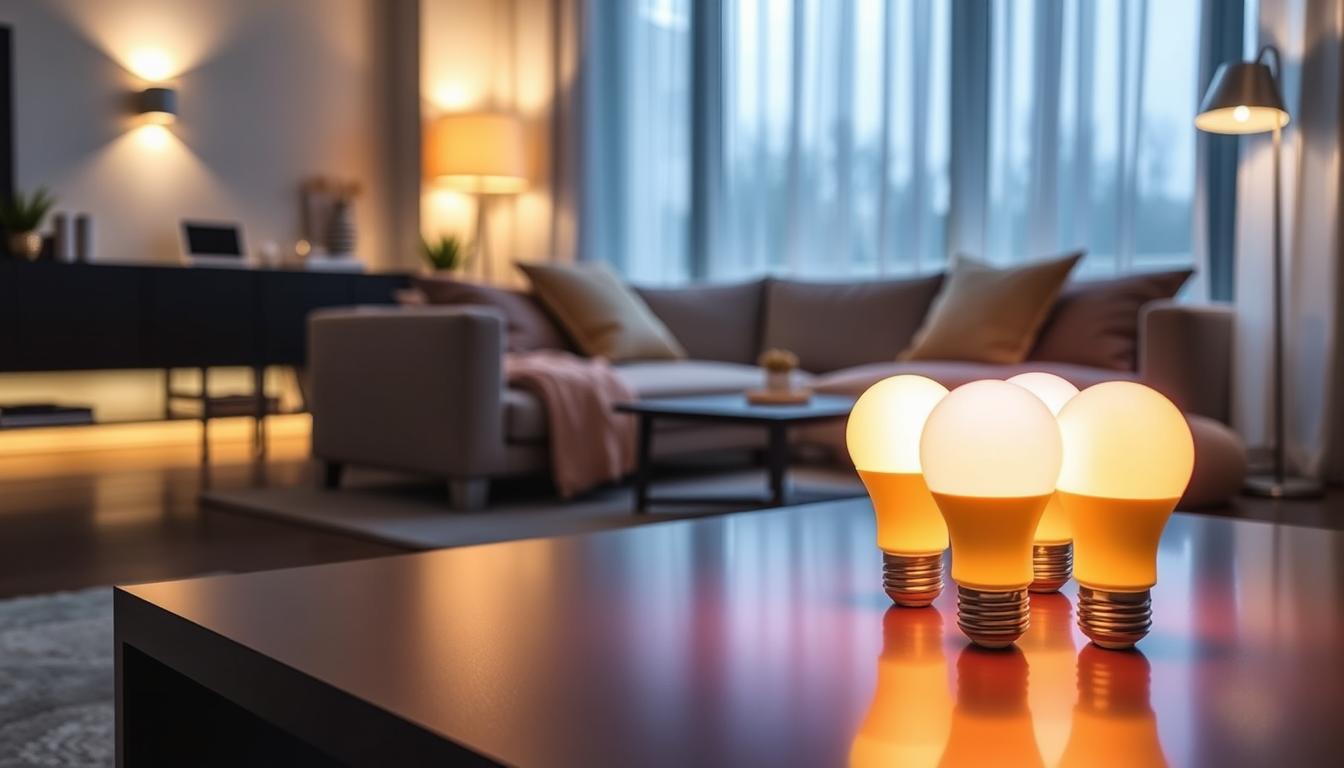
For many, the first step is using smart LED bulbs. They fit right into your current light sockets. You can change the brightness and color with your phone. They’re great for beginners who want to try smart home tech without professional help.
Smart Fixtures
For a more lasting and sleek look, consider smart fixtures. These have the tech built into the fixture itself. They offer a cleaner look than bulbs and often have better performance. Integrated lighting is perfect for rooms like kitchens or home offices.
If you like your current lights, try smart light switches. This is a cost-effective way to update your home. It keeps your decor the same but adds digital control to your space.
Smart Strips
Smart light strips for home are great for adding personality. They stick to surfaces and are perfect for spots like bookshelves or under cabinets. They create a warm, ambient light that changes a room’s feel with just a tap.
| Hardware Type | Best Use Case | Installation Difficulty |
|---|---|---|
| Smart Bulbs | Table lamps and floor lights | Very Low |
| Smart Fixtures | Ceiling and wall lighting | Moderate |
| Smart Switches | Existing overhead lighting | Moderate |
| Smart Strips | Accent and decorative lighting | Low |
Key Features of Smart Lighting
Getting to know the main features of connected home lighting is key to a smart home. These systems do more than light up a room. They give us control over our homes like never before.
Remote Control Capabilities
Modern lighting lets us control our homes from anywhere. With apps on our phones, we can change light levels or turn them off from afar.
This remote access means we don’t have to worry about lights left on. Whether we’re at work or on vacation, our phone controls our home.
Automation and Scheduling
Intelligent scheduling makes our lives easier. It lets our lights adjust to our routines without us having to do anything.
For instance, we can set our connected home lighting to:
- Get brighter in the morning like the sun.
- Dim at night to signal bedtime.
- Turn on specific patterns when we get home.
Voice Control Integration
Voice control makes our lives more convenient. It lets us control our homes without using our hands. By linking our lights with smart assistants, we can change a room’s mood with just a voice command.
This is super handy when our hands are busy or we’re lounging on the couch. Seamless integration means our connected home lighting responds fast to our voice. It makes our homes feel more intuitive and responsive than ever.
Choosing the Right Smart Lighting for Our Home
Changing our living space starts with the right smart lighting solutions. These should match our needs. A good upgrade comes from matching our tech with our habits and home design.
Assessing Our Space
We must look at each room’s needs before buying new lights. Think about whether we need bright lights for work or soft ones for sleep.
Identify which areas we use most. Focus on these spots first. This way, our smart lighting solutions will be most useful where we spend our time.
Compatibility with Existing Systems
It’s key to make sure new lights work with our current smart home. Check if they work with Amazon Alexa, Google Home, or Apple HomeKit.
Some lights need a hub, while others connect to Wi-Fi. To avoid trouble, look at the best smart lights. See which ones fit well with what we already have.
Budget Considerations
We don’t have to change everything at once. Starting with a few smart bulbs is easier. This lets us add more as we can.
Planning ahead helps us stay within budget. Focus on key areas first. This way, we can add more smart lighting solutions as our budget grows. It makes the transition smoother.
Enhancing Home Security with Smart Lighting
Adding smart lighting solutions to our homes is a smart way to keep them safe. We often see lights as just for seeing in the dark. But, they can also scare off people who shouldn’t be there. Upgrading our homes makes them safer for our families.
Motion Sensors
Motion sensors are a great way to boost safety. They turn on lights when they sense movement. This makes dark spots like walkways or entry points instantly bright.
These sensors also serve as a warning to intruders. When lights suddenly go on in a dark area, it tells them someone is watching. This quick response is a big plus of smart lighting solutions.
Alerts and Notifications
Using scheduling and remote access adds more security. We can set lights to turn on and off at certain times. This makes it look like someone is home, even when we’re not.
Many systems send alerts to our phones in real-time. If a sensor spots something while we’re out, we get a quick update. This lets us know what’s happening at home, no matter where we are. These smart lighting solutions give us real peace of mind.
| Feature | Primary Benefit | Security Impact |
|---|---|---|
| Motion Sensors | Automatic Illumination | High Deterrence |
| Scheduling | Simulated Occupancy | Medium Deterrence |
| Mobile Alerts | Instant Awareness | High Awareness |
Creating Ambiance with Smart Lighting
We can change the mood of any room with smart lighting. By adjusting the light, we turn ordinary spaces into personalized retreats. These spaces meet our needs at any time of day.
Color Temperature Adjustments
The comfort of our home often depends on the light’s warmth or coolness. We can switch from cool white light in the morning to warm hues at night. This helps us relax.
Color temperature control mimics natural daylight. It helps our bodies stay in sync and makes our homes feel welcoming.
Dimming Options
Dimming changes a room’s feel instantly. We don’t need big hardware anymore. Most smart systems offer smooth dimming through apps.
Dimming creates an intimate atmosphere for movie nights or dinners. Consistent dimming also saves energy and makes bulbs last longer.
Scene Creation
Creating scenes lets us save our favorite lighting setups. With a voice command, we can start a “Movie Night” scene. It dims main lights and turns on accent lights.
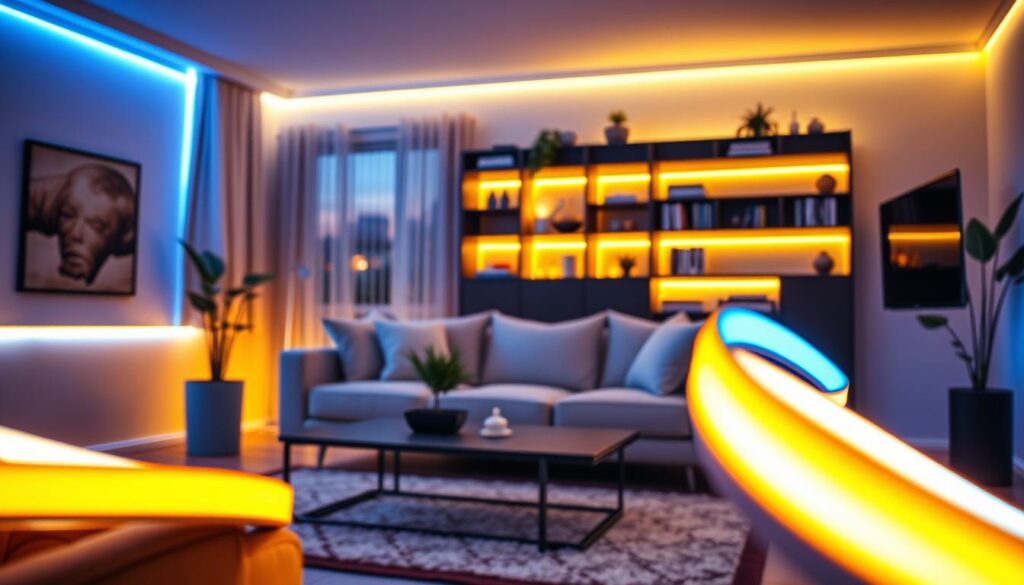
We often use smart light strips for home decor. They add color and highlight features or under-cabinet areas. These tools match our mood.
Smart scenes make our home perfect for any occasion. With smart light strips, our living room becomes a versatile space.
Smart Lighting for Energy Efficiency
Switching to energy-efficient home lighting is good for our money and the planet. We can control how and when our lights use power with smart bulbs.
Cost Savings Over Time
LEDs and smart scheduling save us money. LEDs need much less electricity than old bulbs. This means lower bills every month.
Setting schedules for lights helps too. Automation stops us from leaving lights on when no one’s home. This is a big energy waste in many homes.
“The greatest threat to our planet is the belief that someone else will save it.”
Eco-Friendly Options
Choosing energy-efficient home lighting makes our homes greener. These systems cut down on our carbon footprint by using less electricity.
Smart bulbs last a lot longer than regular ones. This means fewer bulbs in landfills, helping our environment.
| Lighting Type | Energy Usage | Lifespan |
|---|---|---|
| Incandescent | High | Short |
| CFL | Medium | Moderate |
| Smart LED | Low | Long |
By using these technologies, we can lessen our environmental impact. Energy-efficient home lighting lets us enjoy a modern home while caring for our planet.
Popular Smart Lighting Brands
Choosing the right smart lighting brands is key to a connected home. When we pick smart LED bulbs, we’re setting the stage for our home’s future. Each brand has its own strengths, meeting various needs and tastes.
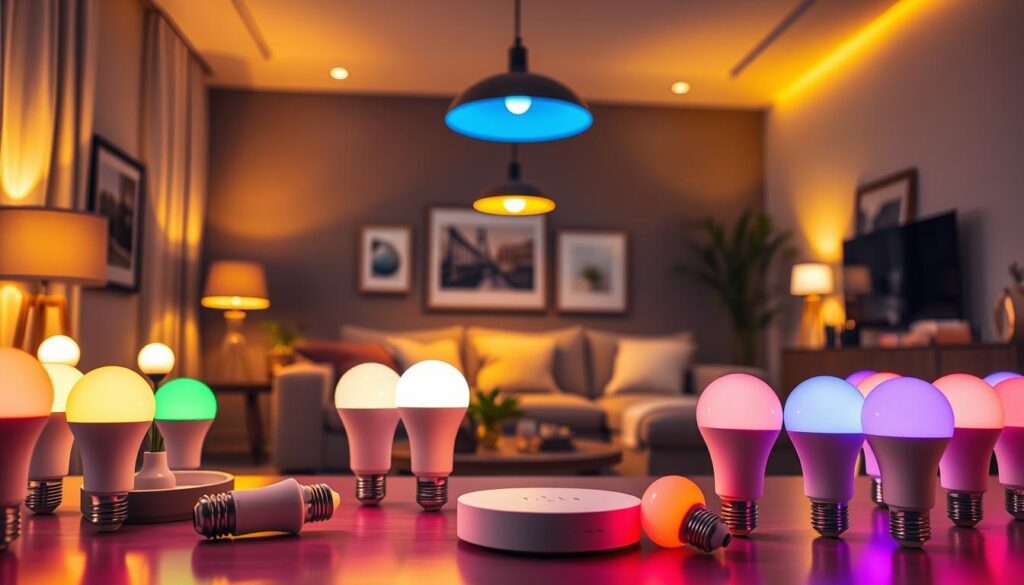
Philips Hue
Philips Hue is a top choice for many. It’s known for unmatched reliability and a wide range of products. Their bulbs, strips, and outdoor lights work well together. Plus, their system keeps our network stable, even with many devices.
LIFX
LIFX is great for those who don’t need a hub. Their smart LED bulbs shine brightly and show vivid colors. They connect directly to Wi-Fi, making setup quick and easy.
Wyze
Wyze is perfect for those on a budget. Their smart LED bulbs offer key features like scheduling and color changes at a low cost. They’re ideal for trying smart lighting without spending a lot.
| Brand | Hub Required | Best Feature | Price Range |
|---|---|---|---|
| Philips Hue | Yes | Ecosystem Depth | Premium |
| LIFX | No | Color Vibrancy | Mid-Range |
| Wyze | No | Affordability | Budget |
Installation Tips for Smart Lighting
We can easily change our living space by following a few simple steps. A good setup makes sure our connected home lighting works well all day. Preparing our space well makes the process easier.
DIY vs. Professional Installation
Many modern lights are easy to install. If we know how to use basic tools, we can often change bulbs or plug-in modules by ourselves. Self-installation works well for simple setups that don’t need electrical changes.
But, we should get a licensed electrician for complex smart light switches or hardwired lights. They make sure everything is safe and meets codes. If we’re not sure about wires, getting a pro is the smartest choice.
Wiring Considerations
Before installing smart light switches, we need to check our home’s wiring. Some advanced switches need a neutral wire, which might not be there in older homes. Always turn off the main power before working with electrical parts.
Safety is our top priority during this step. If our wiring isn’t right, we might need special devices. Talking to a pro can help avoid dangers and ensure a stable electrical connection.
App Setup
After installing the hardware, we set up our devices through a mobile app. We need a stable Wi-Fi network in our home. A strong signal is key for a smooth connected home lighting experience.
We should follow the app’s instructions closely. Most apps help us name rooms and create groups for control. Updating our devices’ firmware also brings us the latest features and security patches.
Conclusion: Embracing Smart Lighting in Our Home
Adding modern tech to our homes makes them more responsive to our needs. By using smart lighting for home, we turn regular rooms into smart, intuitive spaces. This change boosts our comfort and adds value to our homes over time.
Refining Our Daily Experience
Designing with people in mind and using advanced tech improves our lives. Choosing brands like Philips Hue or LIFX gives us control over our space. These upgrades fit our lifestyle and needs perfectly.
Building a Smarter Future
Embracing these innovations makes our homes safer and more enjoyable. Start by figuring out where smart control is most needed. Investing in smart lighting keeps our homes efficient, modern, and welcoming for years.